유희
작가 유희
1966년 충남출생
학력
1998년 목원대학교 회화과 졸업
주요 개인전 & 아트페어
아트페어
2025 kiaf SEOUL (Coex)
2024 Affordable art fair (Hong Kong)
2024 화랑미술제 (Coex)
2022 Kiaf 한국 국제아트페어 (Coex)
2020 조형아트페어 (Coex)
2019 Harbour art fair (Hong kong) 2018 Affordable art fair (Singapore)
2017 Affordable art fair (Hong kong)
2016 Kiaf 한국 국제아트페어 (Coex)
개인전
2024 자생적 질서 (Duru artspace, 서울)
2020 Variation-백자의 꿈 (Duru artspace. 서울)
2018 회화적 유희전 (Duru artspace. 서울)
2014 정물을 말하다 (Fifteen gallery. 서울) 2012 인물의 연극성 (Banditrazos gallery. 서울)
2008 자연으로의 회귀 (Kasan gallery. 서울) Group Exhibition and art fair
Self-Generating Order
My work begins from a conceptual attitude I call Uiseop Hwaseo (儀攝畵序).
Uiseop Hwaseo (意涉化序) is a conceptual term coined by the artist (Artist’s Concept Term). It refers to an aesthetic idea in which human intention (意) intervenes in the world (涉) and, through the process of transformation (化), leads to the emergence of a new order (序).
Uiseop Hwaseo is not simply a formal method of painting. Rather, it is a way of thinking about both the order that emerges within the pictorial field and the attitude that a human being takes toward that order.
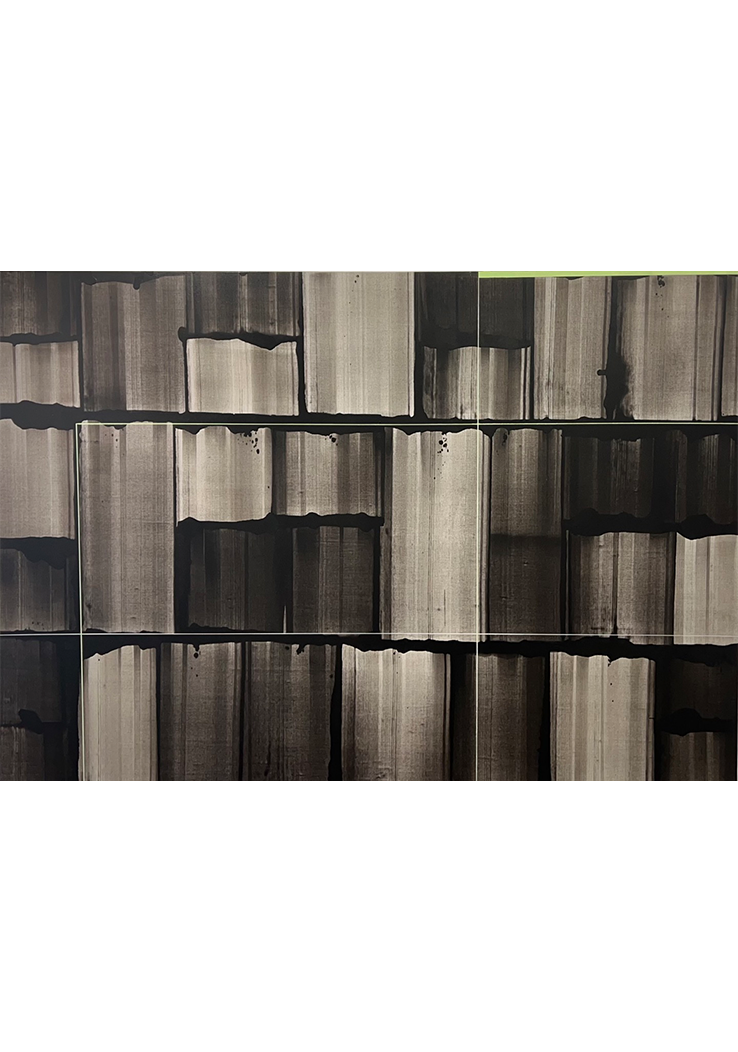
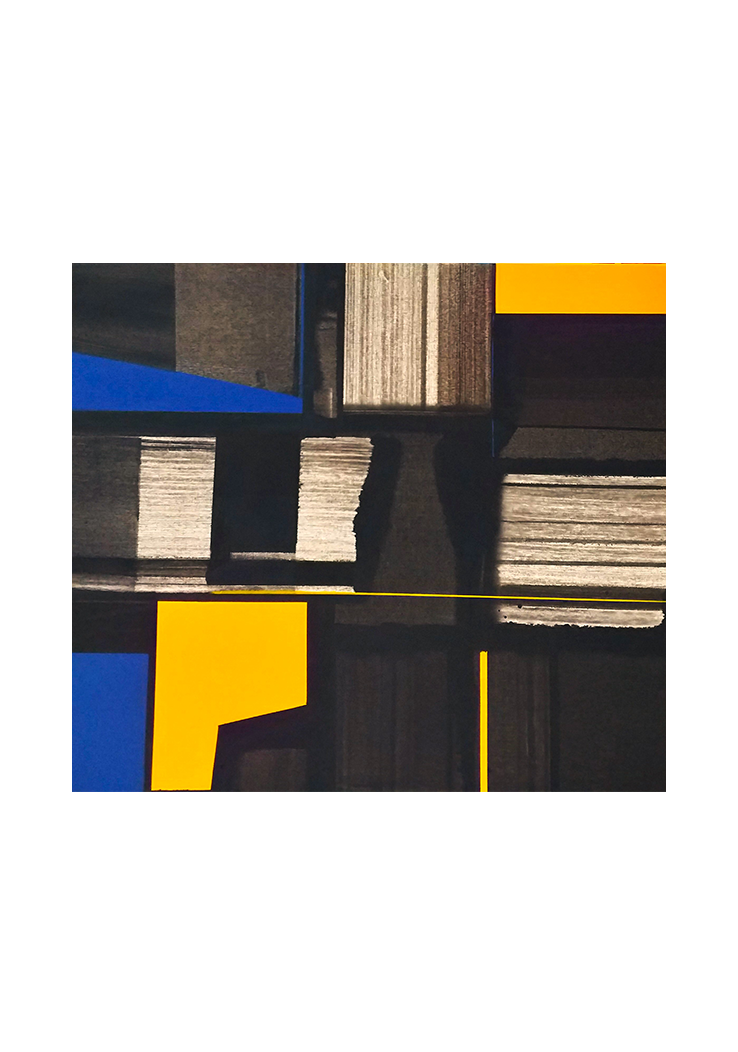
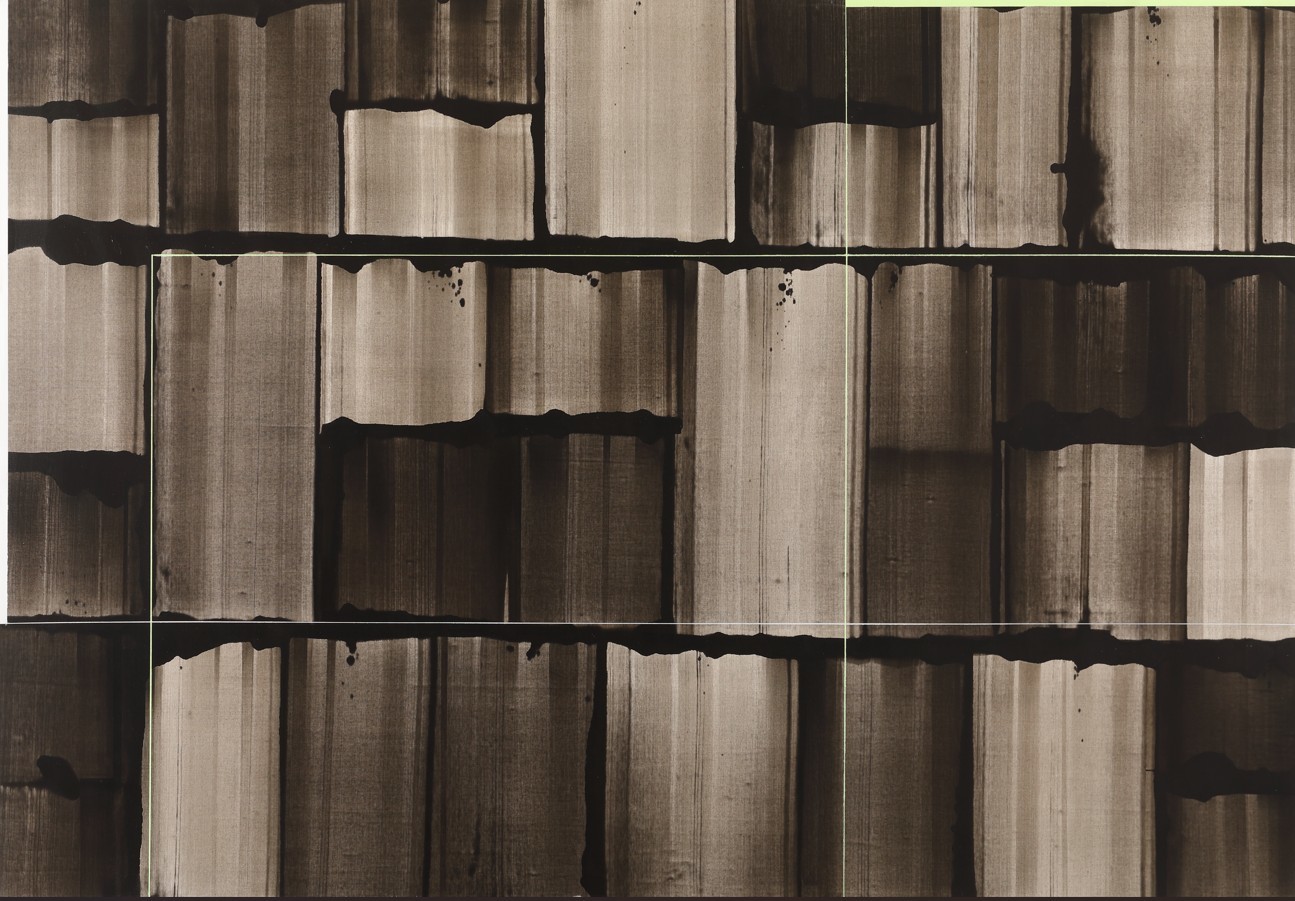
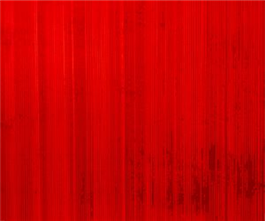
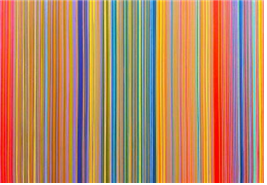
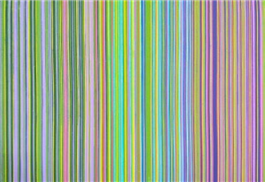
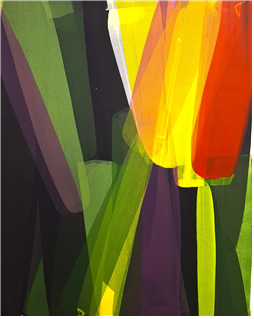
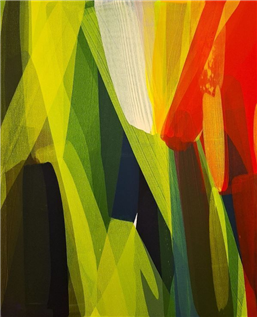
Instead of completely controlling the canvas, I begin my paintings by allowing materials to form their own structure. My process starts by pouring paint onto the canvas and repeatedly pushing and pulling it with a squeegee. As squeegees of different sizes pass across the surface, the paint mixes, compresses, and spreads, producing unexpected traces and structures.
Through repetition, certain flows and patterns gradually appear. I try not to interfere with this process as much as possible, observing the self-generating order produced by the movement of material. This order is not the result of a predetermined design but something that forms through the process itself. The flow of paint, differences in pressure, the accumulation of time, and repeated gestures gradually reveal a structure within the surface. In this sense, I am less the creator of that structure than a witness to its formation.
My sensitivity to such order is deeply connected to my childhood experiences. I grew up near tidal mudflats by the sea. With the rhythm of the tides, the mudflat constantly transformed, producing ripple-like formations and various traces across its surface. Footprints left by people or marks made by tools would often disappear when the tide returned the next day, yet each moment produced new patterns and orders.
As a child, I watched these landscapes and experienced the mystery of nature generating its own order.
One day, however, a massive seawall construction began cutting across the mudflat. Built to connect islands, the long seawall appeared like a gigantic line crossing the vast tidal plain. At the time it seemed astonishing and fascinating. But as time passed, I began to think about human intervention within the natural order. The engineers who designed the reclamation project likely believed it was the most rational choice to secure more land and food. Yet such intervention inevitably transformed the terrain and environment of the mudflat, allowing another ecosystem and a new order to emerge.
This memory later became an important point of reflection in my work.
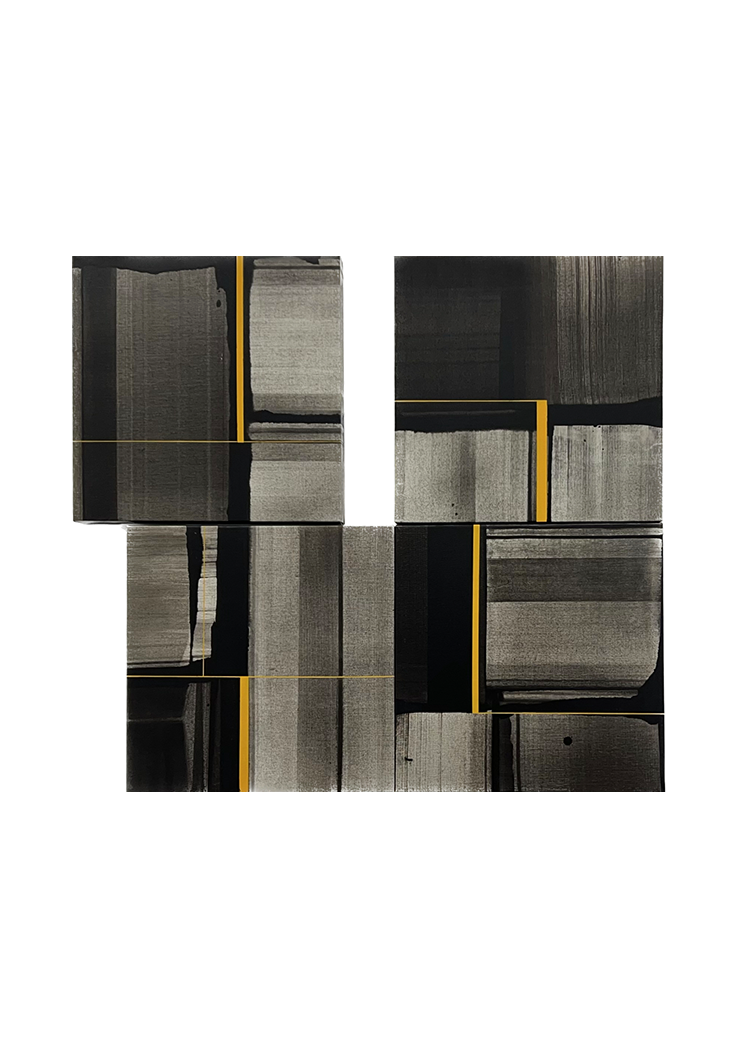
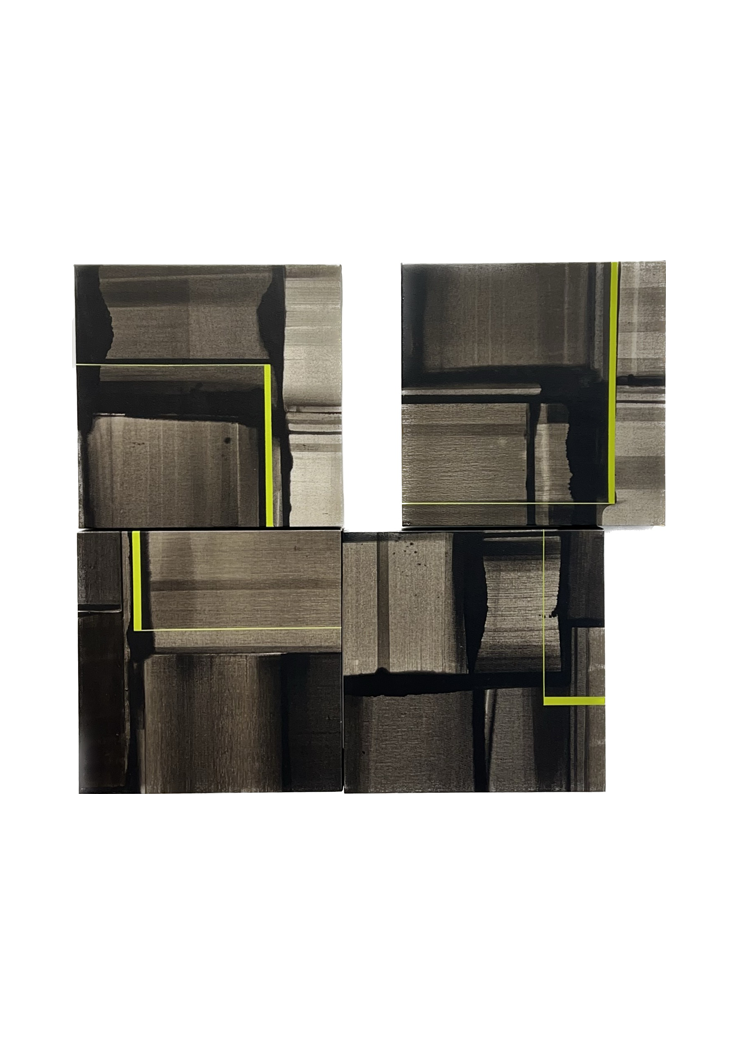
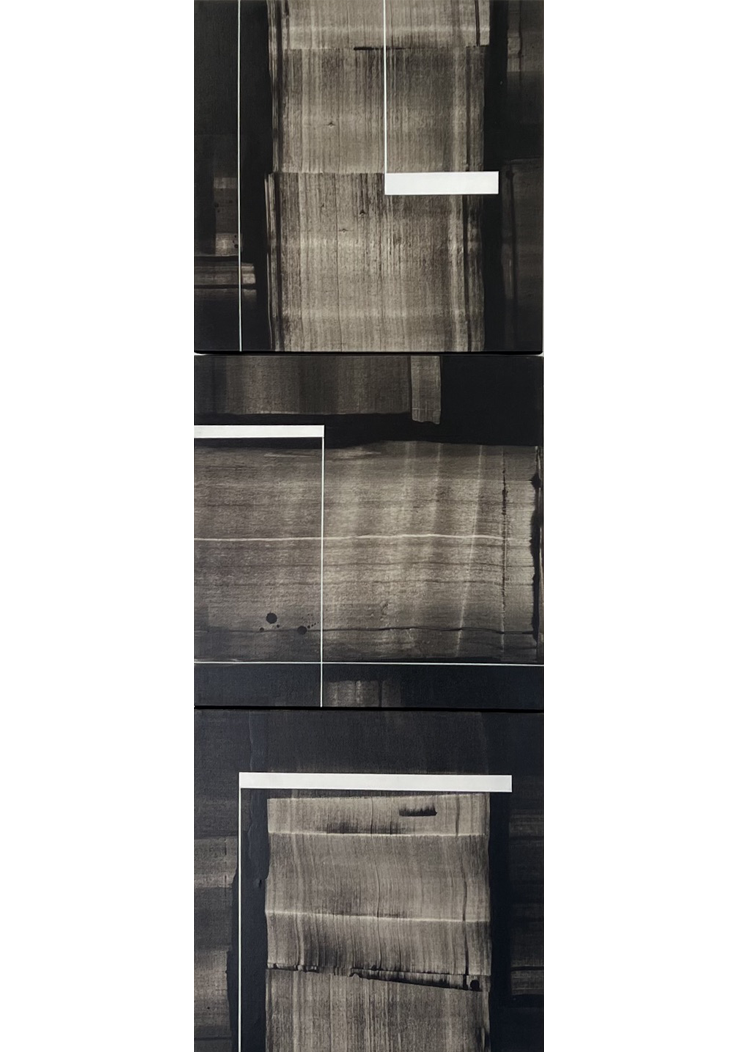
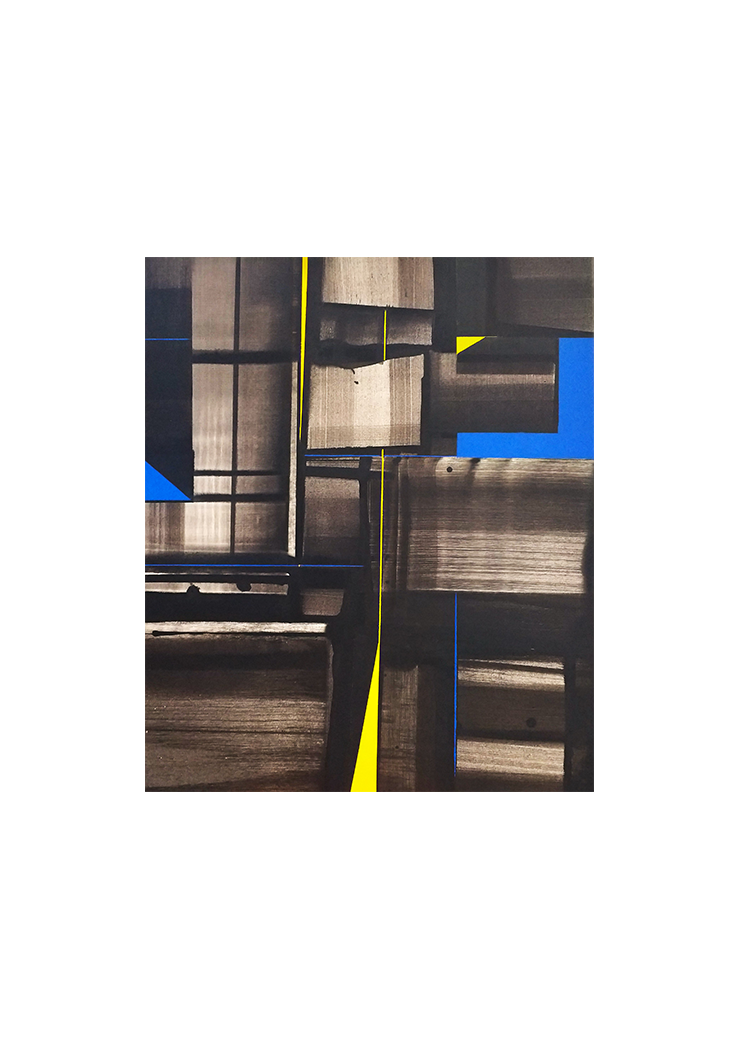
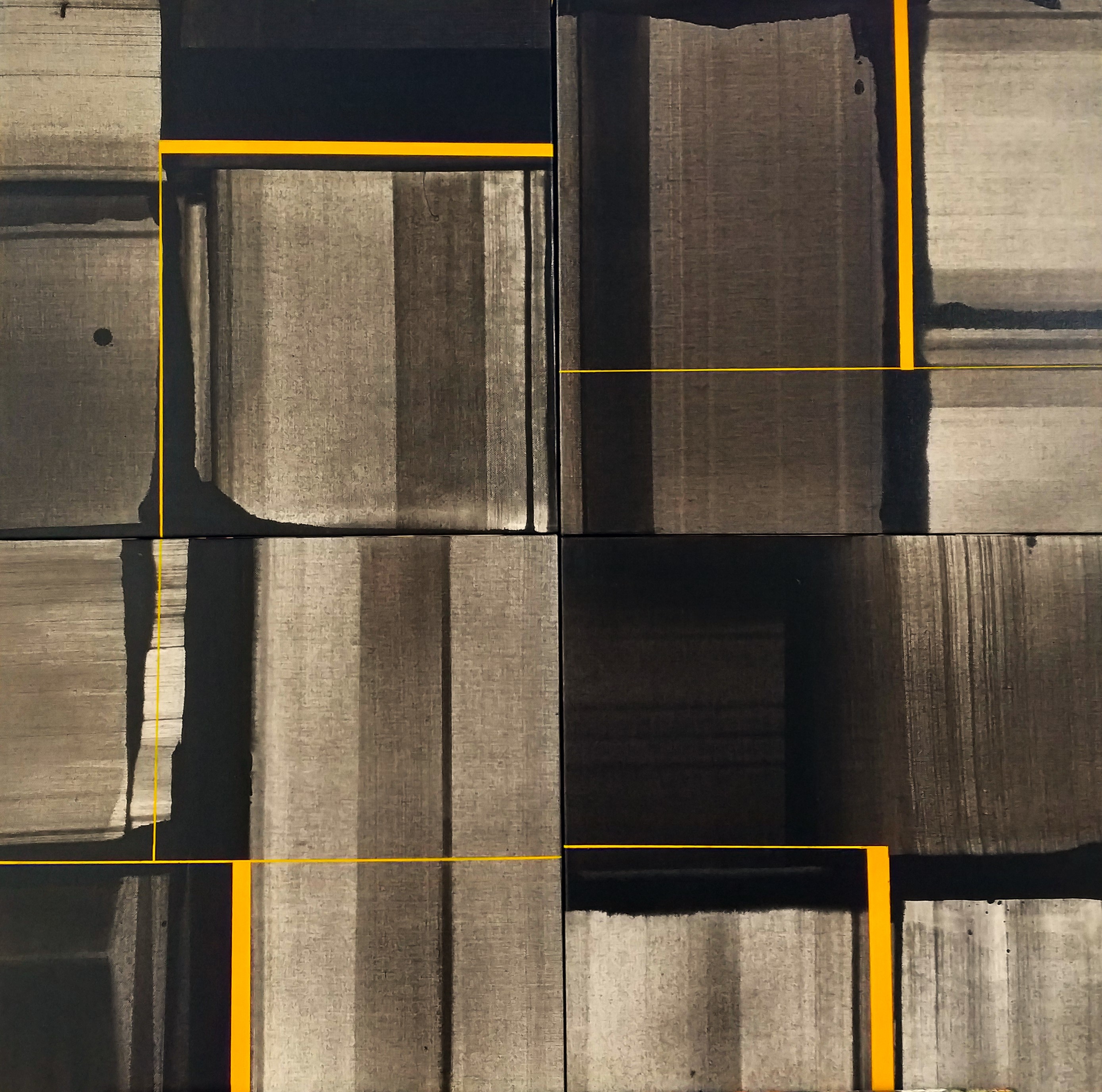
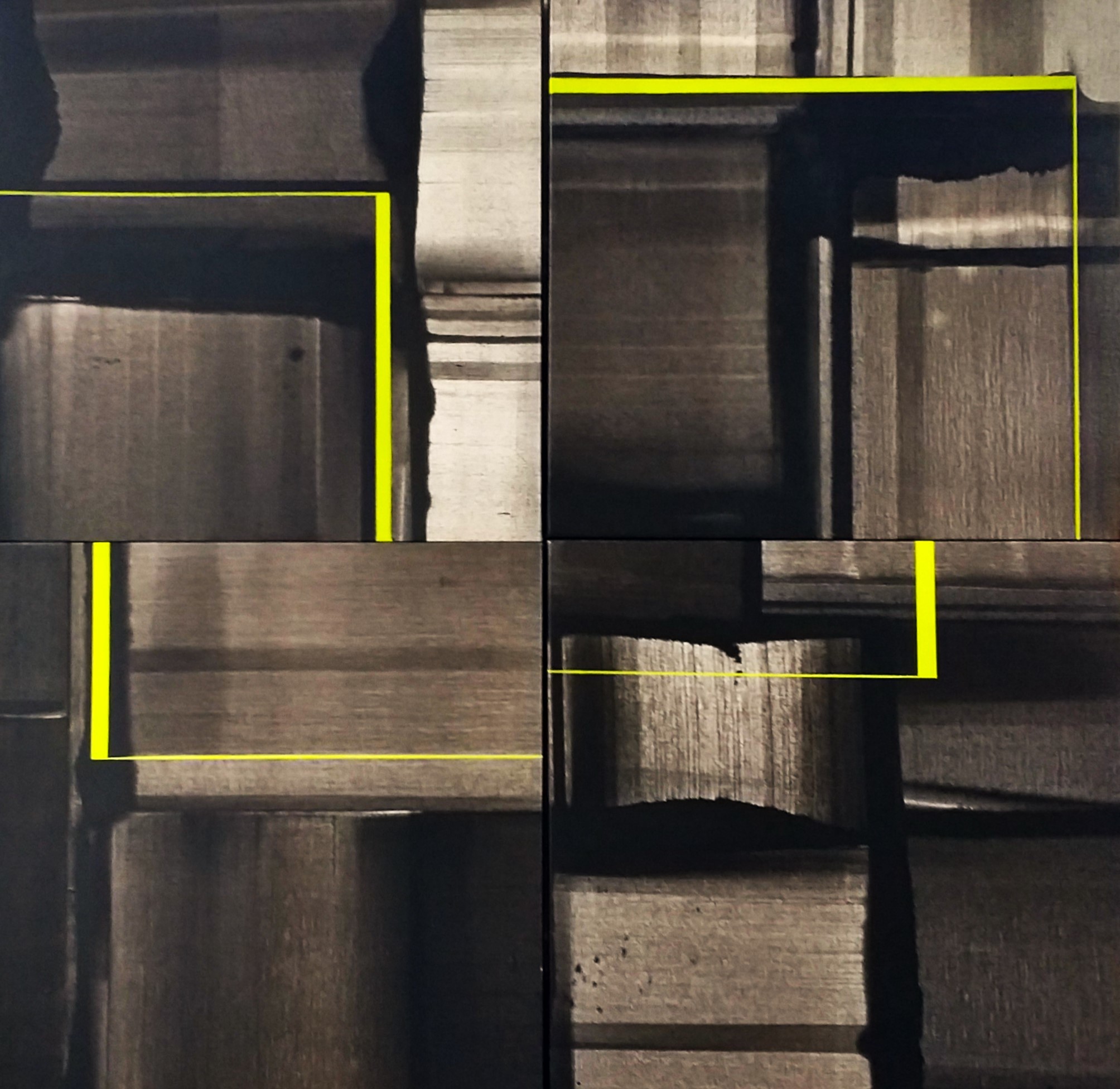
As the repeated movement of the squeegee continues on the canvas, the surface eventually reaches a critical state. If the process continues further, the structure may collapse; if it stops, the present state will remain. For this reason, I often stop at this threshold before complete resolution. At that moment, I draw a single line on the surface.
This line is not a compositional element meant to structure the painting. Rather, it records the moment when a human intervenes within a self-generated order.
After long observation and careful consideration, I decide that this is the most appropriate moment. The line is then drawn decisively. It appears quickly and sharply on the surface in a single gesture.
Therefore, this line is not merely a line but a trace of will and decision. It is a declaration—“this is where it stops”—while simultaneously carrying the uncertainty and responsibility that accompany such judgment.
Human intervention is always made with the belief that it is the best choice, yet it can never be completely certain. Within that tension and uncertainty, I draw the line.
In this sense, the line holds three meanings simultaneously.
First, it is a trace of human intervention within a self-generating order.
Second, it marks the moment at which the painting stops—a declaration of completion.
Finally, it functions as an open sign that raises a question. When viewers encounter the line, they are confronted with a question: What does this line mean, and why is it placed here?
Thus the line becomes a device that provokes reflection.
Sometimes the line runs straight across the canvas to its edge; at other times it bends toward another direction. Yet it does not signify a break. Rather, it suggests that the order continues beyond the canvas. For me, the order within the painting does not end within the surface of the canvas; it remains an open structure that can extend beyond it.
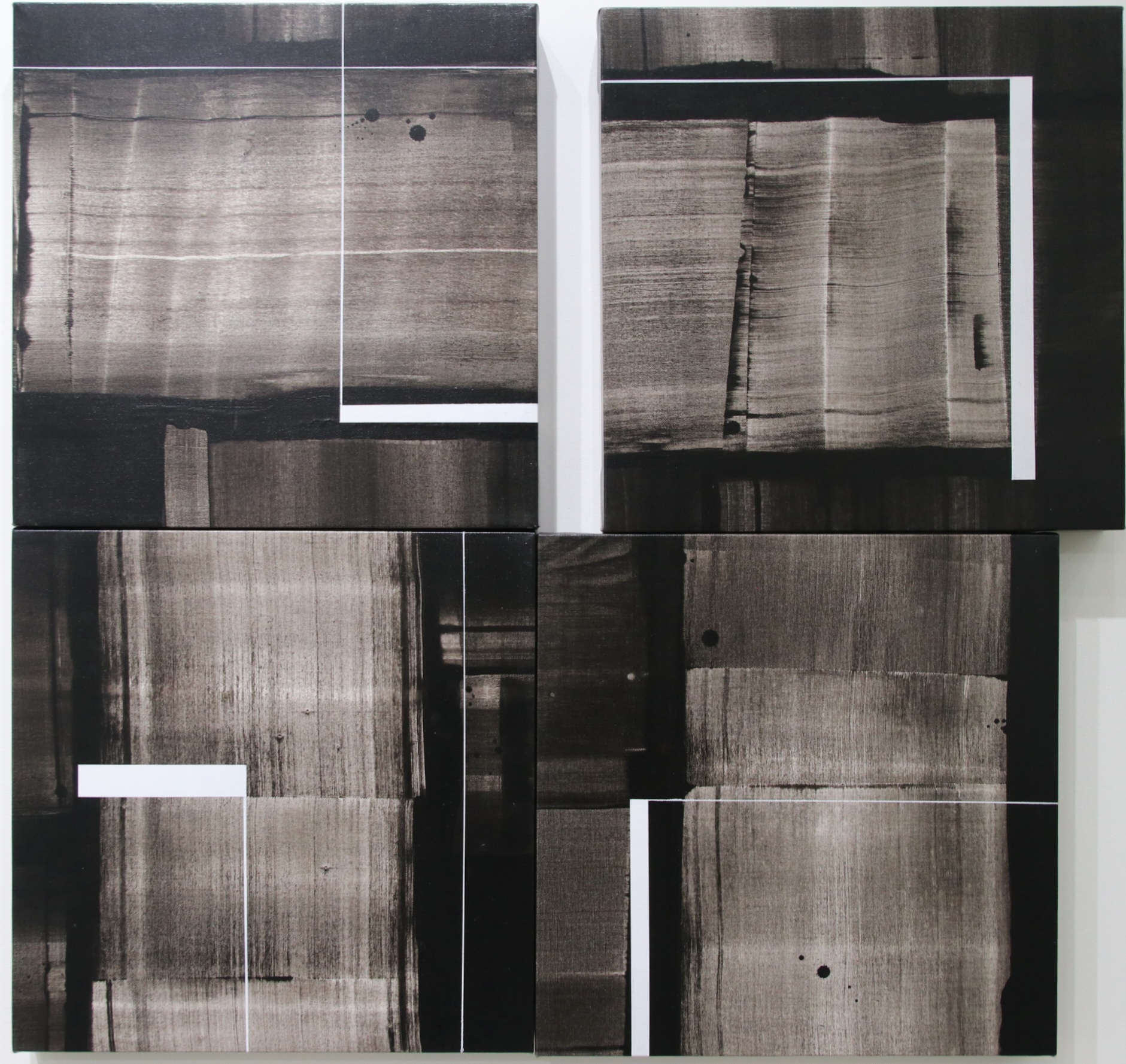
This idea also appears in the physical structure of the work. I sometimes connect multiple square canvases to expand the painting into a larger field. Each canvas functions as a unit of order, and when combined, they form a broader structure. In exhibition space these modules are arranged either in parallel or in sequence, operating less as a single image than as a system of order.
In this sense, my paintings aim not at the completion of a single image but at revealing the process in which order forms and comes to a halt.
The self-generating order that arises on the surface, the artist’s judgment before that order, and the single line that records that judgment—these three elements together complete my painting.
Ultimately, my work explores the point where self-generated order and human decision meet.
I observe the order that forms on its own within the canvas and make a decision as a human being standing before it. That decision remains as a single line. The line marks completion, but it is also the beginning of another question—the moment when order shifts and moves elsewhere.
나의 작업은 의섭화서(儀攝畵序)라는 개념적 태도에서 출발한다.
의섭화서(意涉化序)는 작가가 창안한 개념어(Artist’s Conceptterm)로 인간의 판단과 뜻(意)이 사물에 개입하여(涉), 변화의 과정(化)에서 새로운 질서(序)로 귀결된다는 미학적 개념이다.
의섭화서는 단순한 형식적 방법이 아니라, 화면 안에서 형성되는 질서와 그 질서 앞에서 인간이 취하는 태도를 함께 사유하는 하나의 작업 방식이다.
나는 화면을 완전히 통제하기보다 물질이 스스로 질서를 형성하도록 두는 과정을 통해 회화를 시작한다. 작업은 캔버스 위에 물감을 떨어뜨리고 스퀴즈를 이용해 밀고 당기는 반복적인 행위로 이루어진다. 서로 다른 크기의 스퀴즈가 지나가면서 물감은 섞이고 밀집하며 예상하지 못한 흔적과 구조를 만들어낸다. 이러한 반복 속에서 일정한 흐름과 구조가 서서히 나타난다. 나는 이 과정을 가능한 한 방해하지 않으려 하며 물질의 움직임이 만들어내는 자생적 질서를 관찰한다. 이 질서는 계획된 설계가 아니라 과정에서 스스로 형성되는 질서이다. 물감의 흐름, 압력의 차이, 시간의 축적, 그리고 반복되는 행위 속에서 화면은 하나의 구조를 드러낸다. 나는 그 구조를 만들어내는 주체라기보다 그것이 형성되는 과정을 지켜보는 존재에 가깝다.
이러한 질서에 대한 감각은 어린 시절의 경험과도 깊이 연결되어 있다. 나는 바닷가의 갯벌에서 자라며 밀물과 썰물이 반복되는 갯벌은 끊임없이 변화하며 물결 같은 지형(연흔)과 다양한 흔적들이 형성된다. 사람들의 발자국이나 도구가 끌리며 남긴 자국은 다음 날 물이 들어오면 대부분 사라지지만, 그 순간마다 갯벌의 표면에는 새로운 패턴과 질서가 만들어진다. 어린 시절 나는 이러한 풍경을 바라보며 자연이 스스로 만들어내는 질서의 신비를 경험했다.
그러나 어느 날 갯벌을 가로지르는 거대한 방파제 공사가 시작되었다. 섬을 연결하기 위해 만들어진 긴 방파제는 넓은 갯벌을 가로지르는 하나의 거대한 선처럼 보였다. 어린 시절에는 그것이 놀라운 광경이었고 동시에 신기한 구경거리였다. 하지만 시간이 지나면서 나는 자연의 질서를 가로지르는 인간의 개입에 대해 생각하게 되었다. 간척사업을 설계한 사람들 역시 그 당시에는 그것이 더 많은 토지와 식량을 얻기 위한 가장 합리적인 선택이라고 믿었을 것이다. 그러나 그러한 개입은 갯벌의 지형과 환경을 변화시켰고, 이후 그 공간에는 또 다른 생태와 새로운 질서가 형성되었다. 이 기억은 훗날 나의 작업에서 중요한 사유의 출발점이 되었다.
캔버스 위에서 스퀴즈의 반복이 계속되다 보면 순간 화면은 임계 상태에 도달한다. 더 진행하면 구조가 무너질 수도 있고, 멈추면 지금의 상태로 남게 되는 지점이다. 그래서 나는 대부분 완전한 완성 이전의 임계 상태에서 멈춘다. 그리고 그 순간 나는 화면 위에 하나의 선을 긋는다. 이 선은 화면을 구성하기 위한 조형적 요소가 아니다. 그것은 자생적으로 형성된 질서 앞에서 인간이 개입한 순간을 기록하는 행위이다. 오랜 시간 화면을 바라보고 심사숙고한 끝에, 나는 지금이 가장 적절한 순간이라고 판단한다. 그 판단이 내려지는 순간 선은 단호하게 그어진다. 이 선은 빠르고 날카롭게, 한 번의 행위로 화면 위에 남는다.
따라서 이 선은 단순한 선이 아니라 의지와 결정의 흔적이다. 그것은 “여기서 멈춘다”는 선언이자, 동시에 그 판단이 옳은지에 대한 불안과 책임을 함께 안고 있는 행위이다. 인간의 개입은 언제나 최선이라고 믿고 선택하지만, 그 선택이 언제나 옳다고 확신할 수는 없다. 나는 그 긴장과 두려움 속에서 선을 긋는다.
이러한 의미에서 선(線)은 세 가지 의미를 동시에 가진다.
첫째는 자생적 질서 속에서 인간이 개입한 흔적이다. 둘째는 그것은 화면이 멈추는 순간을 표시하는 완결의 선언이다. 마지막으로 질문을 던지는 열린 표식이다. 선을 바라보는 순간 관람자는 질문을 마주하게 된다. 이 선은 무엇을 의미하며 왜 이 위치에 그려졌는가. 나의 선은 이러한 질문을 유도하는 장치이기도 하다. 이 선은 직선으로 화면 끝까지 이어지기도 하고, 다른 방향을 향해 구부러지기도 한다. 그러나 그것은 단절이 아니라 화면 밖으로 이어지는 질서의 연장을 암시한다. 나에게 화면 속 질서는 캔버스 안에서 완전히 끝나는 것이 아니라, 그 밖으로도 계속 이어질 수 있는 열린 구조이다.
이러한 생각은 작업의 물리적 구조에서도 나타난다. 나는 정방형 캔버스를 여러 개 연결하여 하나의 화면처럼 확장하기도 한다. 각각의 캔버스는 하나의 질서 단위이며, 서로 연결되면서 더 큰 구조를 형성한다. 전시 공간에서는 이 모듈들이 병렬 혹은 직렬로 배열되며, 하나의 작품이 아니라 질서의 시스템처럼 작동한다. 따라서 나의 작업은 단일한 이미지의 완성을 목표로 하기보다 질서가 형성되고 멈추는 과정 자체를 드러내는 회화에 가깝다. 화면 위에서 형성되는 자생적 질서와 그 앞에서 이루어지는 작가의 판단, 그리고 그 판단이 남긴 하나의 선. 이 세 가지가 만나면서 나의 회화는 완성된다.
결국, 나의 작업은 자생적으로 형성되는 질서와 인간의 선택이 만나는 지점을 탐구한다. 나는 화면 위에서 스스로 형성되는 질서를 지켜보고, 그 질서 앞에서 한 인간으로서의 판단을 내린다. 그리고 그 판단은 하나의 선으로 남는다. 그 선은 완결의 표시이지만 동시에 또 다른 질문의 시작이며 질서가 이동하는 순간이다.
캔버스는 작은 우주이다. 물감이 스퀴지에 의해 밀리고 흩어지며 입자들은 궤적을 만들어낸다. 그 과정에서 질서가 형성되며 그 궤적들은 모여 선을 만들고 면을 구성하며 새로운 공간을 확장해 간다.
작가 노트 中 (2023두루아트스페이스 개인전)